5 Hidden Causes of Chronic Back Pain (And How to Fix Them Without Surgery)
Back pain can result from an injury or known problem, but it can also have hidden causes. Keep reading to learn more about these causes and how to avoid surgery.

If you take a blood thinner and need treatment for neck pain, you may have been told to stop your medication first. For years, that was standard practice. But research Dr. Vivek Babaria helped author suggests the decision may not be that simple.
The Research Behind the Question
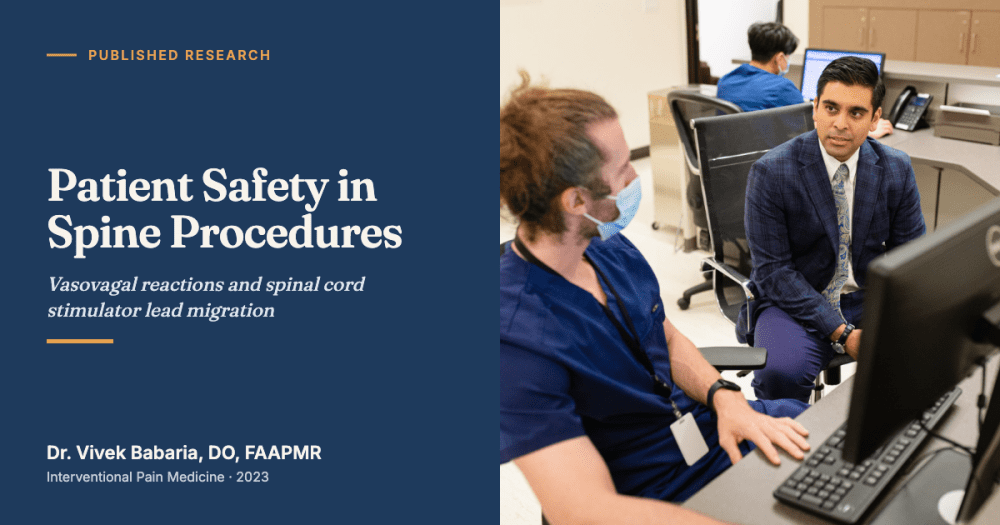
Dr. Babaria, a board-certified, fellowship-trained interventional spine and regenerative medicine physician at OCSS Health, was selected for the Spine Intervention Society’s Patient Safety Committee. As part of that committee, he co-authored a paper published in Interventional Pain Medicine that looked at patients on anticoagulant (blood thinner) and antiplatelet medications who undergo cervical medial branch blocks.
A cervical medial branch block is a minimally invasive injection used to diagnose and treat pain coming from the small joints of the neck. Because the procedure involves a needle near the spine, providers have often asked patients to pause blood thinners beforehand to lower the chance of bleeding.
“Patient safety is at the center of everything we do. Being part of this committee meant looking closely at the data, not just following what’s always been done.”
What the Committee Found
After reviewing the available data, the committee reached a conclusion that challenges long-standing practice. Dr. Babaria explains that “there is more risk involved with stopping the above-mentioned agents” than with continuing them during the procedure.
Here’s why that matters. Guidelines for stopping blood thinners were largely based on the theoretical risk of bleeding. That risk is real and taken seriously. But patients take these medications for important reasons, such as preventing blood clots, strokes or heart events. Pausing them, even briefly, may expose patients to complications that are more serious than the spine procedure itself.
Dr. Babaria believes these findings could change how physicians weigh the risks and benefits of continuing anticoagulation.
What This Means for Patients
This research doesn’t mean every patient should stay on their medication for every procedure. It means the decision should be personalized. At OCSS Health, your care team looks at:
“Every patient on a blood thinner is on it for a reason. My job is to look at the whole picture and work with their other doctors, so we can treat their pain without putting their health at risk.”
Important: Never stop or change a blood thinner on your own. Always talk with your prescribing doctor and your spine specialist first.
A Safety-First Approach to Spine Care
This research reflects how Dr. Babaria approaches care at OCSS Health, carefully balancing safety and results for each patient. Our practice focuses on minimally invasive and non-surgical options designed to relieve pain and support healing, including image-guided spine injections, regenerative medicine and the Intracept procedure.
Frequently Asked Questions
Do I need to stop my blood thinner before a spine injection?
Not always. Research from the Spine Intervention Society’s Patient Safety Committee suggests that for some procedures, such as cervical medial branch blocks, stopping these medications may carry more risk than continuing them. Your care team will help you make that decision.
What is a cervical medial branch block?
It’s a minimally invasive injection that targets the nerves supplying the small joints of the neck. It may help pinpoint the source of neck pain and provide relief.
Why is stopping a blood thinner risky?
These medications are often prescribed to help prevent blood clots, strokes or heart problems. Pausing them may increase the risk of those events.
Who should I talk to before changing my medication?
Always talk to both the doctor who prescribed your medication and your spine specialist before making any changes.
Schedule a Consultation
If you have neck or back pain and take a blood thinner, Dr. Babaria and the OCSS Health team can help you explore safe, personalized treatment options. Call (949) 216-5277 or request an appointment at our Newport Beach, Huntington Beach or Carlsbad office.
Source: Spinal Surgery News, “Dr. Vivek Babaria discusses his recent research looking at the risk vs benefits of continuing anticoagulation and antiplatelet medication during spine surgery,” June 2023.